Dual Citizenship and U.S. Naturalization: Pros, Cons, and Rules by Country
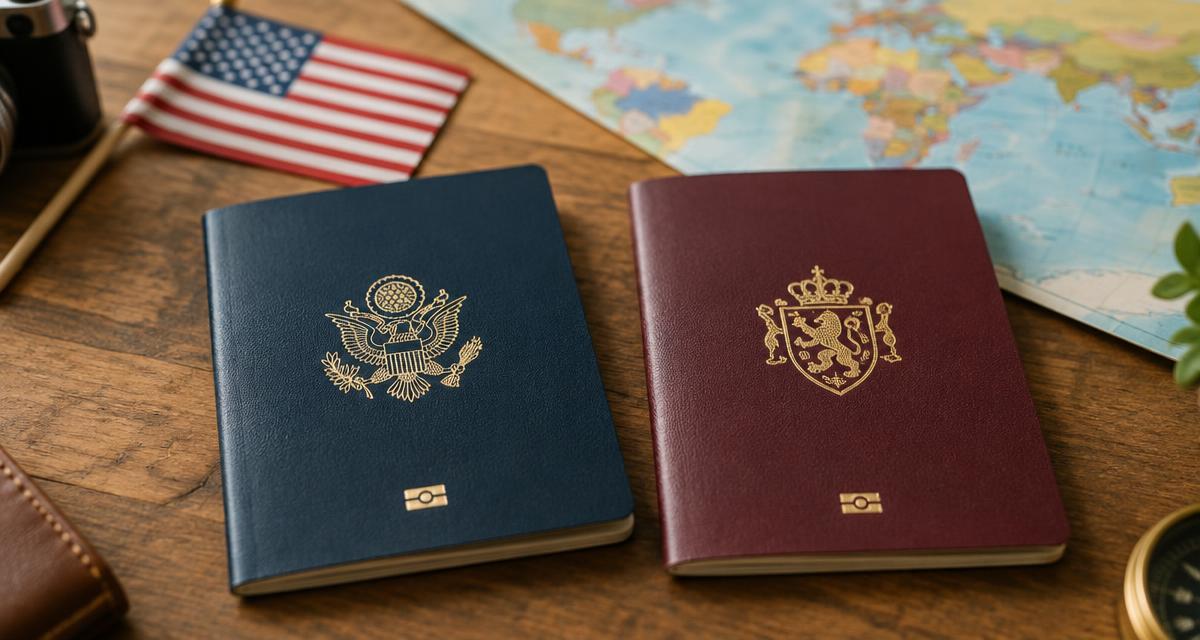
Many green card holders ask the same question before they file Form N-400: "If I become a U.S. citizen, do I lose my first citizenship?" The answer depends far less on the United States than on your other country. This guide explains how dual citizenship works, its real advantages and drawbacks, how to decide, and how the rules differ for the countries most of our readers come from.
Rules change often. Always confirm your situation with your home country's embassy or consulate before your oath ceremony.
Does the United States allow dual citizenship?
Yes. U.S. law does not require you to give up your other nationality when you naturalize, and the U.S. government does not ask for proof that you did. The U.S. State Department confirms that a U.S. citizen may also be a citizen of another country.
The Oath of Allegiance includes the words "absolutely and entirely renounce" other allegiances. In practice, the United States does not enforce this as a loss of your other citizenship. What matters is whether your other country treats your U.S. naturalization as giving up its citizenship.
The pros of dual citizenship
- Two passports, more freedom to travel. You can enter and live in both countries without visas.
- Right to live and work in both countries. No work permits or residence cards in your home country.
- Property and inheritance. Some countries limit land ownership or inheritance by foreigners. Keeping your citizenship avoids those limits.
- Family ties. It is easier to care for aging parents, stay long periods, or move back later.
- Voting and public life. You may keep voting rights in your home country (rules vary).
- Passing citizenship to your children. Many countries let citizens pass nationality to children born abroad.
- A backup option. A second citizenship can matter during a crisis, job change, or retirement.
The cons of dual citizenship
- U.S. taxes follow you everywhere. The United States taxes its citizens on worldwide income, even if you live abroad. You may also need to report foreign bank accounts (FBAR) above $10,000 in total. Tax treaties and the foreign tax credit help, but the paperwork remains.
- Obligations to two countries. Your other country may require military service, taxes, or jury duty.
- Limited U.S. consular help in your other country. If you are arrested in a country that also considers you its citizen, that country may treat you only as its own national.
- Passport rules. U.S. citizens must use a U.S. passport to leave and enter the United States. Your other country may require you to use its passport there.
- Some government jobs and security clearances. Holding or actively using a foreign passport can complicate a security clearance.
- Extra cost and paperwork. Renewing two passports, registering abroad, and keeping records in two systems.
How to decide: five questions to ask yourself
1. Does my home country even allow it? If not, the decision is made for you: naturalizing means losing that citizenship (see the country list below). 2. Do I plan to live, retire, or own property in my home country? If yes, keeping citizenship—or getting a long-term status like India's OCI—matters a lot. 3. Are there obligations I want to avoid? Check military service and tax rules in your home country. 4. Do I need a security clearance or federal job? Talk with your employer's security office before acting. 5. What do my children need? Find out whether your children can claim your home country's citizenship.
If your country allows dual citizenship and you have family or property there, keeping both is usually the practical choice. If your country does not allow it, the question becomes whether U.S. citizenship is worth the loss—for most green card holders, voting, a U.S. passport, and protection from deportation make it worth it.
Rules by country
These summaries cover adults who voluntarily become U.S. citizens. Rules for people who were born with two nationalities can be different.
Countries that generally allow dual citizenship
- Mexico: Mexican nationality by birth cannot be lost. You keep it after U.S. naturalization.
- Philippines: Natural-born Filipinos can keep or reacquire citizenship under Republic Act 9225 by taking an oath of allegiance at a Philippine consulate.
- United Kingdom, Canada, Ireland, Australia: Dual citizenship is allowed. Nothing to do.
- Germany: Since June 27, 2024, Germans can naturalize abroad without losing German citizenship.
- France, Italy, Portugal, Spain (for many Latin Americans): Generally allowed.
- Dominican Republic, Colombia, El Salvador, Guatemala, Brazil, Jamaica: Generally allowed. Brazil changed its constitution in 2023 so citizens no longer lose nationality by naturalizing abroad.
- Pakistan: Allows dual citizenship with the United States and a list of other countries.
- Russia: Allows it, but Russian citizens living in Russia must notify authorities of a second citizenship.
- Turkey: Allows it. Turkish citizens should register the new citizenship with a Turkish consulate. Those who give up Turkish citizenship can get a "Blue Card" with many rights.
- Nigeria, Ghana, Haiti: Generally allowed for citizens by birth.
Countries that do not allow dual citizenship
- India: You lose Indian citizenship when you become a U.S. citizen and must surrender your Indian passport. You can apply for an OCI card for lifelong visa-free travel. See our full guide for Indian applicants.
- China: Chinese nationality is lost when a Chinese citizen settles abroad and voluntarily acquires another nationality. You will need a Chinese visa to visit.
- Japan: Japanese citizens who voluntarily become citizens of another country lose Japanese nationality.
- South Korea: Koreans who voluntarily acquire another nationality lose Korean nationality automatically. Many former Koreans use the F-4 Overseas Korean visa.
- Singapore, Indonesia, Malaysia: Dual citizenship is not allowed for adults.
- Ethiopia: Not allowed, but former citizens can get an "Ethiopian Origin ID" (Yellow Card).
- Austria, the Netherlands: Usually you lose citizenship, unless you qualify for an exception or get permission in advance.
- Ukraine: The law does not recognize dual citizenship, although loss is not always automatic in practice.
Countries with special rules
- Vietnam: Generally requires one nationality, but allows exceptions with approval; recent changes made it easier for Vietnamese abroad to keep citizenship.
- Cuba: Cuba does not lose you as a citizen, but inside Cuba you are treated only as Cuban and must enter on a Cuban passport.
- Saudi Arabia and some Gulf states: Acquiring another nationality without prior permission can lead to loss of citizenship.
What to do before your oath ceremony
- Contact your home country's consulate and ask what happens when you naturalize in the U.S.
- Renew documents you will need—or, if your country does not allow dual citizenship, plan how you will visit (visa, OCI, Blue Card, F-4, Yellow Card).
- Don't plan international travel right after the oath until you have your U.S. passport.
- Keep your Certificate of Naturalization safe. You will need it for your U.S. passport and many foreign consular steps.
- Talk to a tax professional if you have income, accounts, or property abroad.
Common questions
More answers about taxes, passports, military service, and country rules are on our dual citizenship FAQ.
Will USCIS ask me to hand in my foreign passport? No. USCIS keeps your green card at the oath ceremony, not your foreign passport.
Can I lose U.S. citizenship by keeping my other one? No. You only lose U.S. citizenship if you voluntarily give it up with the intent to do so, for example by formally renouncing at a U.S. embassy.
Can I travel with my other passport? Yes, outside the United States. But always leave and enter the U.S. with your U.S. passport.
Get ready for the citizenship test
Whatever you decide about your other citizenship, you still need to pass the interview. Study the official civics questions, practice with flashcards, and take a free practice test. Our interview guide and N-400 guide cover the rest.
This article is general information, not legal advice. Citizenship laws change—confirm with the relevant embassy or an immigration attorney.