Becoming a U.S. Citizen from India: OCI, Passport Surrender, and Your Oath Checklist
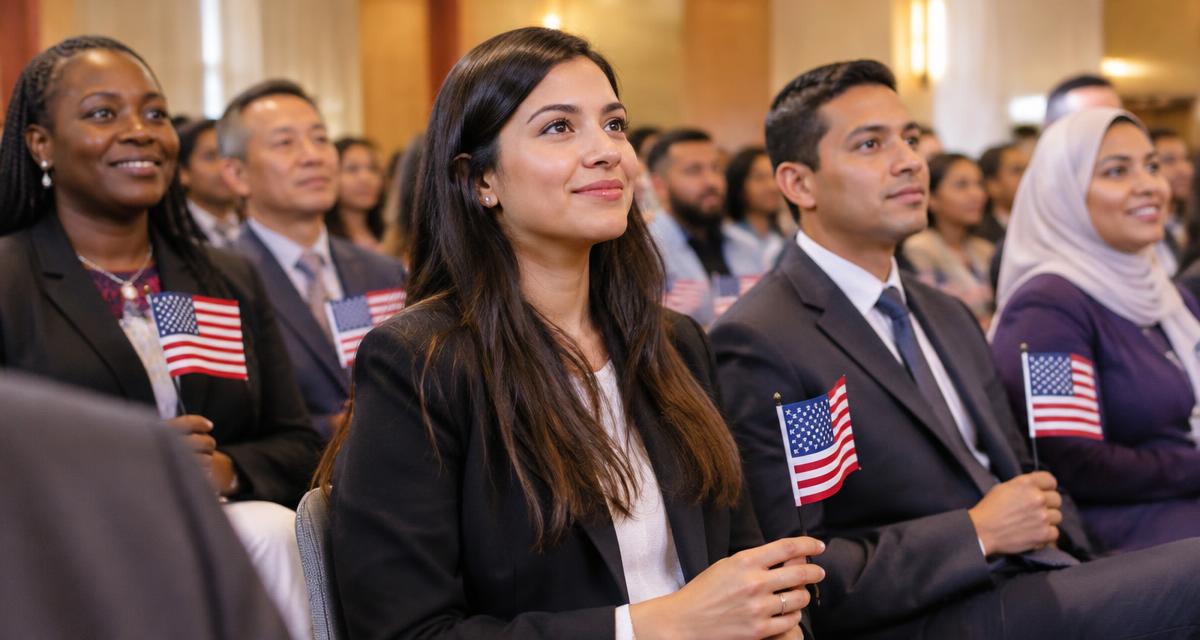
Becoming a U.S. citizen is a major milestone for an Indian green-card holder. It also changes the documents you need to visit India. The American naturalization process and India's passport-surrender and Overseas Citizen of India (OCI) processes are separate: completing one does not automatically complete the others.
This guide is for Indian citizens who already hold U.S. lawful permanent residence and are considering naturalization. It is not a shortcut from living in India or holding an H-1B visa directly to American citizenship. Information checked against official guidance on October 17, 2026; this is general educational information, not individual legal advice. Recheck the linked government and VFS instructions before submitting documents or booking travel.
The short answer: what changes when you become American?
For an ordinary adult naturalization applicant, U.S. citizenship begins when you take the Oath of Allegiance—not when you file Form N-400 or pass your interview. India does not permit Indian citizenship and foreign citizenship simultaneously. Voluntarily acquiring U.S. citizenship means you cease to be an Indian citizen under Indian law and must surrender your Indian passport and obtain a surrender certificate. OCI is a separate immigration status, not a second citizenship or an Indian passport.
The practical sequence is: prepare for naturalization, complete your interview and oath, apply for your U.S. passport, complete the Indian passport-surrender process, and apply for OCI if eligible. Before an international trip, make sure you have both your U.S. travel document and the appropriate permission to enter India. Read the Indian Embassy's surrender guidance and its notice explaining that OCI is not dual citizenship.
1. Check your U.S. naturalization eligibility
Being Indian does not create a separate N-400 eligibility category. Most applicants use the general five-year permanent-resident rule. Some qualify under the three-year rule for spouses of U.S. citizens; that route has additional requirements, including the qualifying marriage, marital union, and the spouse's citizenship. Employment-based green cards do not automatically require a longer naturalization waiting period merely because the applicant was born in India.
Under the usual five-year route, applicants generally need five years of continuous U.S. residence as a permanent resident and at least 30 months of physical presence during those five years. Under the qualifying three-year spousal route, the usual physical-presence requirement is 18 months during those three years. Other requirements include being at least 18, generally three months of residence in the state or USCIS service district where you file, good moral character, and English and civics requirements unless an exception applies.
Continuous residence and physical presence are different. Several short visits to India can reduce your total days physically in the United States. An absence longer than six months but shorter than one year can raise a continuous-residence issue; an absence of one year or more generally breaks continuous residence unless a specific exception applies. A reentry permit does not, by itself, preserve continuous residence for naturalization. Get qualified advice before filing if you have lengthy absences, criminal history, unresolved tax issues, or other complications. See USCIS continuous-residence and physical-presence requirements.
Some applicants using the five- or three-year route can file up to 90 calendar days before satisfying the continuous-residence period. Early filing does not waive the other eligibility requirements. Use the USCIS early-filing guidance instead of guessing from three calendar months. For the wider eligibility picture, see USCIS citizenship through naturalization and our green-card-to-citizenship guide.
2. Prepare Form N-400 and your interview
Start with the official Form N-400 page and instructions. Assemble your residence, employment, travel, marriage, and other required records before filling it out. Indian and U.S. documents may use different name formats: make sure your legal name, date of birth, and supporting documents are consistent, and explain discrepancies rather than silently changing information. Review the form instructions for certified English translations of documents in other languages.
Keep accurate records of trips outside the United States, including trips to India, and disclose the information the form asks for. An N-400 filing does not excuse you from continuing to meet residence and other requirements while your application is pending.
The civics test version depends on the N-400 filing date, not your nationality or the year of your interview. Applicants who filed before October 20, 2025 take the 2008 civics test; applicants who filed on or after that date take the 2025 test. The ordinary 2025 test uses a pool of 128 questions, with up to 20 asked and 12 correct answers required. The ordinary 2008 test uses 100 questions, with up to 10 asked and six correct required. Special rules apply to eligible applicants age 65 or older with at least 20 years as permanent residents.
Study the official wording with our question list, flashcards, and practice test. Language support can help you understand the material, but choosing Hindi in a study app does not itself give you an English-test exemption or permission to take the interview in Hindi. Read USCIS test guidance, our interview guide, and the N-400 form walkthrough.
3. Your oath-ceremony checklist
Passing the interview is not the final step. Follow the date, location, and instructions on your Notice of Naturalization Oath Ceremony, Form N-445. A ceremony may take place on the interview day or be scheduled later. The notice and any supplemental USCIS instructions control what you must bring.
Before leaving for the ceremony
- Read your N-445 and complete its questionnaire as instructed. Answer honestly about changes since your interview, including travel and any other events the notice asks about.
- Bring your N-445, permanent resident card, and any other documents USCIS specifically requests, including USCIS-issued travel documents as directed. Follow the notice's identification instructions.
- Check arrival time, security requirements, accessibility arrangements, and rules about guests for your actual venue.
- Review how your name and other details should appear on your Certificate of Naturalization, especially if you requested a legal name change.
- If you cannot attend, follow the notice and USCIS rescheduling instructions; do not simply miss the appointment.
At the ceremony
- Check in with USCIS and disclose relevant changes since the interview. Do not assume an approved interview means later events no longer matter.
- Return your green card as instructed. USCIS lists limited exceptions, such as a documented lost card; ask USCIS if your situation differs.
- Take the Oath of Allegiance. This is the point at which an ordinary naturalization applicant becomes a U.S. citizen.
- Receive your Certificate of Naturalization and inspect your name, birth date, and other personal details before leaving. Alert USCIS immediately if something is wrong.
Immediately afterward
- Keep the certificate secure and retain a copy for your records. Do not laminate it or make unofficial alterations.
- Start your U.S. passport application if you plan to travel abroad.
- Begin the Indian passport-surrender process using the instructions for your consular jurisdiction.
- Update Social Security citizenship records through the applicable SSA process, and register to vote if eligible.
- If you have children, check their situation separately. Some children automatically acquire U.S. citizenship when the statutory conditions are met, but your oath does not automatically settle every child's nationality or passport paperwork.
The USCIS naturalization-ceremony page explains check-in, returning the green card, taking the oath, and checking your certificate. For Social Security changes, use SSA's citizenship-record instructions.
4. Indian passport surrender: not the same as a U.S. oath
Handing your green card to USCIS does not surrender your Indian passport. USCIS and the Indian authorities administer different processes. Do not assume that saying the American oath cancels the physical Indian passport in the Indian government's records or produces a surrender certificate.
There is also an important terminology distinction. The Indian Embassy's current Washington guidance says someone who has already voluntarily obtained U.S. citizenship must surrender the Indian passport and obtain a surrender certificate. It distinguishes that service from a separate renunciation-of-Indian-nationality application for someone who is still an Indian citizen. Older instructions and everyday discussions sometimes use “renunciation” to describe the post-naturalization paperwork broadly. Follow the current service and checklist that apply to your circumstances rather than filing both processes automatically.
Practical surrender steps
- Identify the Indian embassy or consulate that serves your U.S. residence and use its current passport-surrender instructions.
- Complete the government application through the portal linked by that authority. Save the application reference number and print the application where required.
- Open the current VFS surrender checklist and assemble the requested documents. Expect it to address your Indian passport, evidence of acquired foreign citizenship, identification, and residence; the live checklist determines the exact originals, copies, photographs, and signatures.
- Follow instructions for any name differences, lost passports, or other special circumstances. An expired Indian passport does not eliminate the surrender requirement.
- Pay the current applicable fees and submit through the permitted appointment or courier process. Retain payment and tracking records.
- Keep your surrender certificate for OCI and future consular transactions. Do not discard it once your OCI application is complete.
Use the Embassy's passport-surrender page and VFS's U.S. surrender service. Fees, submission arrangements, and documentary requirements can change; check the current total instead of relying on an old blog's fee or promised turnaround time. Do not continue using an Indian passport after acquiring U.S. citizenship. If you already used it after naturalizing, disclose the situation to the responsible Indian authority and seek its instructions.
5. What OCI gives you—and what it does not
OCI stands for Overseas Citizen of India, but the name can be misleading. It is not Indian citizenship, does not confer an Indian passport, and does not make you a dual Indian-American citizen. Eligible OCI cardholders receive a lifelong multiple-entry visa and specified privileges, subject to the applicable rules and restrictions.
Many former Indian citizens qualify to apply, but approval is not automatic. Eligibility rules address Indian origin, family relationships, and exclusions involving Pakistan or Bangladesh nationality in specified circumstances, including relevant family ancestry. A former Indian citizen, a child of Indian origin, and a foreign spouse may need different supporting documents. Review your actual category rather than borrowing someone else's checklist.
OCI does not include voting rights or the right to hold an Indian passport. It also does not provide every right of an Indian citizen; restrictions and permission requirements can apply to certain activities and property categories. If you are planning work, research, journalism, missionary activity, or a property transaction in India, check the current rules for that activity specifically. See the official OCI FAQ.
Preparing an OCI application after naturalization
- Obtain the U.S. passport details and citizenship evidence required by your application category.
- Obtain the Indian passport-surrender evidence required by the current checklist for a former Indian passport holder.
- Start with the official OCI registration portal and the VFS instructions for applications from the United States.
- Match names, dates of birth, passport numbers, and scanned documents across the application. Explain legal name changes with the required evidence.
- Follow the current photograph, signature, upload, and submission specifications, including separate rules for minors where applicable.
- Check document-authentication requirements before sending your packet. VFS publishes a notice about apostilling foreign documents for OCI; follow the live document-specific checklist rather than assuming ordinary photocopies are sufficient.
- Keep your reference numbers and track the application through the official services. A submitted application or acknowledgment is not an approved OCI card.
Use the official OCI services portal, VFS's U.S. OCI application guidance, the VFS document checklists, and its foreign-documents notice. Check current OCI updating and reissuance rules when you later obtain a new U.S. passport; do not assume the requirements are identical for every age group.
6. Visiting India between your oath and your OCI card
This transition period needs careful planning. After naturalization, your green card is no longer your U.S. reentry document, and your Indian passport is not the passport you should continue using. The State Department says U.S. citizens, including dual nationals, must use a U.S. passport to enter and leave the United States.
For travel to India, you also need an approved OCI card or an appropriate valid Indian visa, depending on your circumstances. If OCI is still pending, check whether you qualify for a visa for your intended travel purpose. An OCI application receipt, surrender appointment confirmation, or Certificate of Naturalization alone does not give you permission to enter India.
Do not make nonrefundable plans based on a friend's processing time. First verify the U.S. passport timeline, surrender requirements, and the entry permission you need for your trip. For urgent travel, consult the relevant authorities about official urgent services; do not assume that “urgent” guarantees faster OCI issuance.
See the State Department's U.S. passport application guidance, its dual-nationality travel rules, and the official Indian visa portal.
Common questions from Indian applicants
Can I keep Indian citizenship after becoming a U.S. citizen?
India does not permit simultaneous Indian and foreign citizenship. For an Indian citizen voluntarily naturalizing in the United States, acquiring U.S. citizenship ends Indian citizenship under Indian law. An OCI card does not change that rule.
Can I apply for U.S. citizenship while holding an Indian passport?
Yes, an Indian passport holder who meets U.S. naturalization requirements can apply for N-400. Filing the application does not itself make you American. The Indian passport-surrender issue arises after you acquire the foreign citizenship.
Do I have to surrender my Indian passport before the American oath?
Do not treat passport surrender as a standard USCIS requirement before the oath. The embassy's post-naturalization surrender process applies after acquiring foreign citizenship. If you are considering formal renunciation before acquiring another citizenship, obtain qualified advice because nationality consequences are serious.
Is OCI automatic after the oath?
No. You must qualify and apply separately. USCIS does not submit an OCI application for you.
What if my Indian passport has expired or my name changed at the oath?
An expired passport can still need to be surrendered. A name change may require additional proof linking your previous and current names. Follow the surrender and OCI checklists and ask the responsible consulate about any mismatch before submitting.
Your final action plan
Before filing, confirm eligibility and organize your N-400 records. Before the interview, study the correct civics version and review your application. Before the oath, read N-445 and plan for the change in travel documents. After the oath, secure and check your certificate, apply for your U.S. passport, surrender the Indian passport, and apply for OCI if eligible. Before visiting India, confirm that your passport and Indian entry permission are actually ready.
You do not have to solve every OCI detail before you begin studying, but you should understand the nationality and travel consequences before taking the oath. Start with our citizenship practice test, then keep the official USCIS, Indian Embassy, and VFS checklists beside you for the paperwork that follows.